At all levels of agricultural regulation – national, European, and international – important changes are required to be able to address the challenges of climate change. Climate-smart agriculture (CSA) is crucial, on the one hand, to mitigate climate damage to the agricultural sector and, on the other hand, to reduce greenhouse gas emissions as well as increase the food production for the growing world population. However, the legal instruments to stimulate CSA are absent or are inadequately developed.
This is the conclusion of Jonathan Verschuuren, Professor of International and European Environmental Law at Tilburg University, The Netherlands, based on a two-year study into climate-smart agriculture.
According to current estimates, the global demand for food will increase by 40-60% between now and 2050. However, the required increase in food production will be hard to achieve because of the impact of climate change and will, moreover, lead to more greenhouse gas emissions. Even now, 25% of these emissions worldwide can be attributed to agriculture. Addressing the three challenges of growing food production, climate change, and CO2 reduction in concert requires a transition of the world's farming sector to become "climate-smart". Jonathan Verschuuren studied the measures to stimulate this transition.
One of the few countries in the world where some experience exists with regulations to stimulate climate-smart agriculture is Australia. Verschuuren's research there has led to the following conclusions.
The measures that have been taken or have been planned by the European Union are woefully inadequate to make the agricultural sector resilient to the impacts of climate change, Verschuuren says.
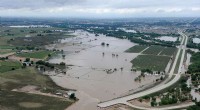
The agricultural sector will increasingly feel the adverse effects of climate change, especially in southern Europe but also in the north, for instance, droughts, extreme weather events, flooding, and plant diseases. In addition, the increasing global demand for food must be balanced against a reduction of CO2 emissions.
Verschuuren therefore makes the following recommendations.