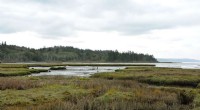
While both deserts and tundra are harsh environments, their unique characteristics lead to distinct adaptations in their plant life. Here's a comparison:
Deserts:
* Climate: Extremely dry, with low rainfall (less than 10 inches annually). Temperatures can fluctuate greatly, with scorching days and freezing nights.
* Soil: Typically sandy or rocky, with poor nutrient content.
* Adaptations:
* Water conservation: Deep roots, thick cuticles, reduced leaf surface area, succulent stems, CAM photosynthesis.
* Heat tolerance: Sun-reflecting surfaces, hairs, and spines.
* Rapid growth and reproduction: Taking advantage of rare rainfall events.
* Examples: Cacti, succulents, Joshua trees, sagebrush, creosote bush.
Tundra:
* Climate: Cold and dry, with permafrost (permanently frozen ground). Short growing season with long, dark winters.
* Soil: Thin, acidic, and often waterlogged.
* Adaptations:
* Cold tolerance: Shallow roots, dwarf growth forms, hairy surfaces, and antifreeze compounds.
* Short growing season: Rapid flowering and seed production.
* Wind resistance: Low-lying growth, thick stems, and strong roots.
* Examples: Lichens, mosses, dwarf shrubs, sedges, arctic willow.
Comparison Table:
| Feature | Desert | Tundra |
|---|---|---|
| Rainfall | Low | Low |
| Temperature | Hot days, cold nights | Cold throughout the year |
| Soil | Sandy, rocky, poor nutrients | Thin, acidic, waterlogged |
| Growing Season | Short, intermittent | Short, during summer |
| Adaptations | Water conservation, heat tolerance | Cold tolerance, wind resistance |
| Examples | Cacti, succulents, Joshua trees | Lichens, mosses, dwarf shrubs |
Key Differences:
* Water availability: Deserts have scarce water, leading to adaptations for water conservation. Tundra has frozen water, making it difficult for plants to access.
* Temperature extremes: Deserts experience significant temperature fluctuations, while tundra has consistent cold temperatures.
* Soil conditions: Desert soil is typically sandy and nutrient-poor, while tundra soil is thin, acidic, and waterlogged.
* Growth forms: Desert plants are diverse, with cacti, succulents, and shrubs. Tundra plants are mostly low-lying, including lichens, mosses, and dwarf shrubs.
Conclusion:
Both desert and tundra plants have evolved unique adaptations to survive in harsh environments. While they share some similarities, like low rainfall and short growing seasons, their specific challenges and adaptations are quite different.