Factors that influence forest plant life:
* Climate: Temperature, rainfall, and sunlight levels all play a role.
* Latitude: Forests closer to the equator have different plant communities than those closer to the poles.
* Altitude: Higher elevations often have colder temperatures and less sunlight, impacting plant growth.
* Soil type: Soil composition and nutrient levels affect which plants can thrive.
* Disturbances: Fire, windstorms, or human activity can alter the plant community.
Common plant types found in forests:
* Trees: These are the dominant plants in most forests. Examples include oak, maple, pine, spruce, redwood, and birch.
* Shrubs: Smaller woody plants that often grow in the understory of forests. Examples include rhododendron, azalea, mountain laurel, and blueberry bushes.
* Herbs: Non-woody plants that include wildflowers, ferns, mosses, and grasses.
* Vines: Climbing plants that can grow up trees or along the ground. Examples include poison ivy, Virginia creeper, and wild grape.
* Mushrooms and Fungi: These play a vital role in breaking down organic matter and releasing nutrients back into the soil.
Examples of forest types and their plants:
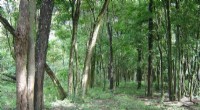
* Temperate Deciduous Forests: These forests have trees that lose their leaves in the fall. Common plants include oak, maple, hickory, beech, wildflowers, ferns, and mushrooms.
* Temperate Coniferous Forests: These forests are dominated by evergreen trees such as pine, fir, and spruce. They also have shrubs, mosses, and lichens.
* Tropical Rainforests: These forests have a wide diversity of plants, including towering trees, vines, orchids, ferns, and many types of flowering plants.
* Boreal Forests: These forests are found in cold, northern climates and are dominated by coniferous trees like spruce, fir, and pine. They also have shrubs, mosses, and lichens.
To learn more about the plants in a specific forest, you can do the following:
* Look up the type of forest you are interested in.
* Visit a local nature center or botanical garden.
* Use a plant identification app or website.
I hope this helps!