1. Using technology to enhance vision:
* Telescopes: Allow us to see distant objects like stars and galaxies that are too far away for the naked eye.
* Microscopes: Allow us to see incredibly small objects like cells and bacteria that are too tiny for our eyes to perceive.
* Night vision goggles: Enhance our ability to see in low-light conditions.
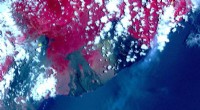
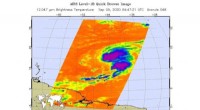
* Infrared cameras: Detect heat signatures and can be used to see through fog, smoke, or darkness.
* Ultraviolet cameras: Detect ultraviolet light, which is invisible to humans, and can be used for various applications like forensic analysis or medical imaging.
2. Expanding our visual perception through other senses:
* Echolocation: Some animals, like bats and dolphins, use sound waves to navigate and "see" their surroundings even in complete darkness.
* Electroreception: Some animals, like sharks and platypuses, can detect electric fields, allowing them to sense the presence of prey or other objects.
3. Metaphorical interpretations:
* Seeing beyond the surface: This refers to the ability to understand things on a deeper level, going beyond superficial appearances.
* Seeing the unseen: This suggests having an intuitive or prophetic understanding of events or information not readily available to others.
Therefore, "seeing beyond the range of natural vision" can encompass a wide range of concepts, from technological advancements to metaphorical interpretations. It ultimately depends on the specific context and what you are trying to communicate.