1. Uniform Dispersion: Individuals are evenly spaced apart, often due to competition for resources or territoriality. Examples include:
* Plants: Some desert plants, like creosote bushes, secrete toxins that inhibit the growth of other plants in their vicinity.
* Animals: Penguins nesting on a beach maintain a uniform spacing to minimize interference during breeding.
2. Clumped Dispersion: Individuals are grouped together in patches, often driven by resource availability or social behaviors. Examples include:
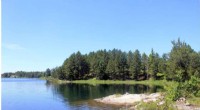
* Plants: Trees in a forest often clump together in areas with suitable sunlight and water.
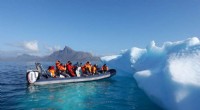
* Animals: Schools of fish, herds of zebras, and flocks of birds exhibit clumped dispersion, providing safety in numbers and facilitating foraging.
3. Random Dispersion: Individuals are distributed randomly and independently of one another, often seen in environments with uniform resources and no strong social interactions. Examples include:
* Plants: Dandelions in a meadow may disperse randomly, as seeds are carried by wind or water.
* Animals: Dandelions in a meadow may disperse randomly, as seeds are carried by wind or water.
It's important to note that these patterns are not always absolute, and many ecosystems display a combination of different patterns. The specific factors influencing dispersion can vary greatly depending on the species and its environment.