1. Physical Laws and Principles:
* Gravity: Shapes the structure of planets, stars, and galaxies. It also influences the flow of water and the distribution of matter.
* Electromagnetism: Drives chemical reactions, powers the sun, and governs the behavior of light.
* Thermodynamics: Explains the flow of heat, energy, and entropy. It influences the growth and decay of living organisms and the formation of geological features.
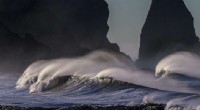
* Fluid Dynamics: Governs the movement of air, water, and other fluids. This explains patterns in weather, ocean currents, and the flight of birds.
2. Biological Processes:
* Evolution by Natural Selection: Leads to the adaptation of organisms to their environment. This can result in patterns of camouflage, mimicry, and other adaptations.
* Self-Organization: The tendency of complex systems to spontaneously form structures and patterns. This is seen in the intricate branching of trees, the formation of flocks of birds, and the spiral arrangement of leaves on a stem.
* Genetic Programming: The instructions encoded in DNA determine the development and form of organisms. This explains the recurring patterns we see in species, like the symmetrical arrangement of body parts.
3. Mathematical Principles:
* Fibonacci Sequence and Golden Ratio: Found in the arrangement of petals in a flower, the spiral arrangement of seeds in a sunflower, and the proportions of the human body. This suggests that these mathematical relationships may optimize growth and efficiency in natural systems.
* Fractals: Repeating patterns at different scales, like the branching of trees, the coastline of an island, and the veins in a leaf. They can result from simple rules iterated over time, showing how complex patterns can emerge from simple principles.
4. Randomness and Chance:
* Stochastic Processes: Events that are governed by chance can also lead to patterns. This is seen in the distribution of stars in the sky, the randomness of mutations in DNA, and the unpredictable nature of weather.
5. Interactions Between Different Forces:
Many patterns in nature are the result of the interplay between multiple forces and principles. For example, the shape of a mountain range is influenced by tectonic plate movements, erosion by wind and water, and the forces of gravity.
Important Note: The explanations for patterns in nature are often interconnected and complex. It is important to remember that these explanations are not mutually exclusive and they often work together to create the intricate and beautiful patterns we see around us.