Common Characteristics of Living Things:
* Organization: Living things are highly organized, with specialized structures (cells, tissues, organs) that work together.
* Growth and Development: They increase in size and complexity over time, following a specific pattern.
* Reproduction: Living things produce offspring, ensuring the continuation of their species.
* Response to Stimuli: They react to changes in their environment, demonstrating sensitivity and adaptation.
* Metabolism: They carry out chemical processes (like breaking down food for energy) to maintain life.
* Homeostasis: They maintain a stable internal environment despite external fluctuations.
* Adaptation: They evolve over time, acquiring traits that help them survive in their environment.
Observations at Different Levels:
* Cellular Level: All living things are made of cells, the basic unit of life. Observing cells under a microscope reveals their structure, components, and activities.
* Organismal Level: We observe the behavior, appearance, and interactions of individual organisms in their natural habitats.
* Population Level: We track changes in population size, distribution, and interactions within a species.
* Ecosystem Level: We observe how different species interact with each other and their physical environment, forming complex webs of life.
Specific Observations in Different Fields:
* Botany: Observations of plant structure, growth patterns, reproduction, and adaptations to different environments.
* Zoology: Observations of animal behavior, physiology, development, and interactions with their environment.
* Microbiology: Observations of microscopic organisms like bacteria, viruses, and fungi, including their roles in disease and ecological processes.
* Ecology: Observations of how living things interact with their environment, including predator-prey relationships, competition, and nutrient cycling.
Examples of Specific Observations:
* A plant growing towards a light source: This demonstrates response to stimuli.
* A bird building a nest: This demonstrates behavior specific to a species.
* Bacteria multiplying in a petri dish: This demonstrates growth and reproduction.
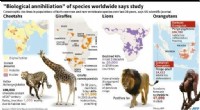
* A lion hunting a gazelle: This demonstrates predator-prey interaction and adaptation.
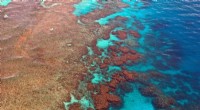
* A coral reef thriving in clear water: This demonstrates the dependence of organisms on specific environmental conditions.
Remember: The list goes on and on, as scientists continually make new observations and discoveries about living things. This vast and complex field is what makes biology so fascinating!