1. Evaporation:
* The sun heats water in bodies like oceans, lakes, and rivers, causing it to evaporate and turn into water vapor.
* Transpiration, the release of water vapor from plants, also contributes to this process.
2. Condensation:
* As water vapor rises, it cools and condenses back into tiny water droplets, forming clouds.
3. Precipitation:
* When the water droplets in clouds become heavy enough, they fall back to Earth as rain, snow, sleet, or hail.
4. Runoff:
* Precipitation flows over the land surface, carrying sediments and nutrients. This is called runoff.
* Some runoff flows into rivers, lakes, and oceans.
5. Infiltration:
* Some precipitation soaks into the ground, a process called infiltration.
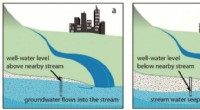
* This water can become groundwater, which flows slowly underground.
6. Groundwater Flow:
* Groundwater can flow back to the surface through springs or seep into rivers, lakes, and oceans.
7. Storage:
* Water is stored in various locations within the ecosystem, including oceans, lakes, rivers, ice caps, glaciers, and groundwater.
The nonliving components of the ecosystem play a crucial role in the hydrologic cycle:
* Sun: Provides the energy for evaporation.
* Atmosphere: Carries water vapor and facilitates condensation.
* Landforms: Influence runoff patterns and infiltration rates.
* Soil: Filters and stores water.
* Rocks: Store and release groundwater.
The movement of water through the nonliving parts of an ecosystem is essential for life on Earth:
* Provides water for plants and animals.
* Regulates temperature.
* Sculpts landscapes.
* Transports nutrients.
By understanding how water moves through the nonliving parts of an ecosystem, we can better manage our water resources and protect the environment.