Experiments:
* Panspermia Experiments: These experiments aim to test the hypothesis that life originated elsewhere in the universe and arrived on Earth.
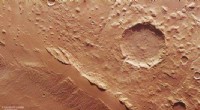
* NASA's Viking missions to Mars: These missions carried out experiments designed to detect signs of life on Mars, though the results were inconclusive.
* Experiments on meteorites: Studies of meteorites, like the Murchison meteorite, have found organic molecules including amino acids, which suggests the possibility of prebiotic materials arriving on Earth from space.
* RNA World Experiments: These experiments explore the idea that RNA, not DNA, was the dominant form of genetic material in early life.
* Self-replicating RNA: Scientists have been able to create RNA molecules that can replicate themselves, supporting the idea that RNA could have played a key role in the origins of life.
* Abiotic Synthesis Experiments: These experiments focus on the formation of other essential building blocks of life, such as lipids and carbohydrates, under prebiotic conditions.
* Formation of cell membranes: Scientists have shown how simple organic molecules can spontaneously self-assemble into membrane-like structures, which could have been crucial for the formation of early cells.
* Experiments on hydrothermal vents: These experiments investigate the potential for life to have originated at hydrothermal vents, which release chemicals from the Earth's interior.
* Deep-sea vents and extremophiles: The discovery of extremophiles, organisms that thrive in extreme environments like deep-sea vents, suggests that life could have emerged in harsh conditions.
Observations and Studies:
* Fossil evidence: The discovery of fossils of early life forms, such as stromatolites (layered structures formed by microbial mats), provides evidence of life dating back billions of years.
* Genetic analysis: Comparisons of the genomes of different organisms have revealed similarities in their basic genetic codes, suggesting a common ancestor for all life on Earth.
* Studies of early Earth environments: Geochemical and geological studies help reconstruct the conditions of early Earth, providing clues about the environment in which life may have first emerged.
Ongoing Research:
Research on the origins of life continues, with new experiments and discoveries constantly challenging and refining our understanding. The field is highly interdisciplinary, involving scientists from biology, chemistry, geology, physics, and astronomy.
While the precise details of how life arose on Earth remain a mystery, these experiments and observations, together with the ongoing research, are leading us closer to understanding this fundamental question.