* Physics: The study of matter, energy, and their interactions. It covers topics like motion, forces, heat, light, electricity, magnetism, and the structure of the universe.
* Chemistry: The study of matter and its properties, as well as how matter changes. This includes the composition, structure, properties, and reactions of substances.
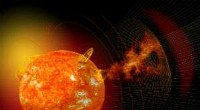
* Astronomy: The study of celestial objects and phenomena. This involves observing and understanding the universe, including planets, stars, galaxies, and other cosmic bodies.
* Earth Science: The study of Earth's physical systems, including its atmosphere, oceans, landforms, and geological processes. This encompasses disciplines like geology, meteorology, oceanography, and climatology.
* Biology: While often considered a separate branch of science, biology also heavily relies on principles of physical science. It's the study of living organisms, their structure, function, growth, and evolution.
These are the main areas of physical science. Within each area, there are numerous specialized sub-disciplines.