Definition:
* Attractive Force: Gravity pulls objects towards each other. The more mass an object has, the stronger its gravitational pull.
* Universal: Gravity affects everything with mass, from tiny particles to massive stars.
* Distance Dependence: The force of gravity weakens as the distance between objects increases.
Explanation:
Imagine a trampoline stretched taut. If you place a bowling ball in the center, it will create a dip in the trampoline's surface. Now, roll a marble across the trampoline. The marble will be pulled towards the bowling ball, following the curvature of the trampoline.
Similarly, objects with mass distort the fabric of spacetime, causing other objects to curve towards them. This curvature is what we perceive as gravity.
Key Points:
* Newton's Law of Universal Gravitation: This law describes the force of gravity between two objects. It states that the force is directly proportional to the product of their masses and inversely proportional to the square of the distance between their centers.
* Einstein's General Relativity: This theory provides a more comprehensive understanding of gravity, explaining it as a consequence of the curvature of spacetime.
* Effects of Gravity: Gravity is responsible for many phenomena we observe, including:
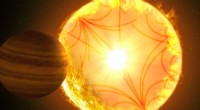
* The Earth's orbit around the Sun.
* The tides on Earth.
* The formation of stars and planets.
* The expansion of the universe.
In essence, gravity is the force that holds us on the ground, keeps the planets in orbit, and shapes the universe itself.