Imagine you have a bag full of marbles, some red and some blue. The natural abundance of an isotope is like the ratio of red marbles to blue marbles in your bag.
Here's a breakdown:
* Isotopes: These are atoms of the same element that have the same number of protons (defining the element) but different numbers of neutrons. This difference in neutrons affects their atomic mass.
* Natural Abundance: This refers to the percentage of each isotope of an element found naturally on Earth. It's essentially the relative amount of each isotope in a sample.
Example:
* Carbon has two main isotopes: Carbon-12 (6 protons, 6 neutrons) and Carbon-13 (6 protons, 7 neutrons).
* The natural abundance of Carbon-12 is about 98.9%, while Carbon-13 makes up about 1.1% of naturally occurring carbon.
Why is Natural Abundance Important?
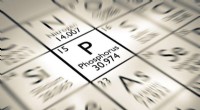
* Determining Atomic Mass: The atomic mass of an element listed on the periodic table is a weighted average of the masses of its isotopes, taking into account their natural abundance.
* Scientific Applications: Natural abundance variations can be used to:
* Age dating: Carbon-14 dating uses the ratio of Carbon-14 (a radioactive isotope) to Carbon-12 to estimate the age of ancient artifacts.
* Geochemistry: Studying the natural abundance of isotopes in rocks and minerals can help scientists understand geological processes and the history of the Earth.
* Forensic Science: Isotopic analysis can be used to identify the origin of materials, helping solve crimes.
In Summary:
The natural abundance of isotopes is a crucial concept in chemistry and other sciences. It represents the proportions of different isotopes of an element found in nature, providing valuable information for diverse scientific applications.