Magnification:
* Increased size: The most obvious change is that the object appears much larger. Light microscopes use lenses to magnify the image, allowing us to see details that are invisible to the naked eye.
* Resolution: The ability to distinguish between two closely spaced points is also enhanced by magnification. However, the resolving power of a light microscope is limited by the wavelength of visible light.
Illumination:
* Artificial light source: Unlike our eyes, which rely on natural light, light microscopes use an artificial light source to illuminate the specimen. This controlled illumination can enhance contrast and reveal details that are difficult to see in natural light.
* Transmitted light: In bright-field microscopy, the most common type, light passes through the specimen and into the objective lens. This results in a bright background with darker objects, highlighting their edges and internal structures.
Contrast:
* Staining: To enhance contrast and visibility, specimens are often stained with dyes that bind to specific cellular components. These stains highlight different structures within the cell, making them easier to distinguish.
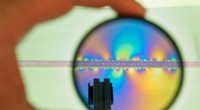
* Phase contrast: This technique uses the difference in the refractive index of different structures to create contrast. It allows visualization of unstained, transparent specimens like living cells.
Optical effects:
* Aberrations: Lens imperfections can distort the image, introducing blurriness or distortions. Techniques like apochromatic lenses and other correction methods minimize these distortions.
* Depth of field: Light microscopes have a limited depth of field, meaning only a thin slice of the specimen is in focus at any given time. This can create a 3D appearance, especially when using multiple focal planes.
Overall, objects viewed through a light microscope appear:
* Larger and more detailed.
* Brightly illuminated and often stained.
* With enhanced contrast and different colors.
* Potentially distorted by optical effects.
The combination of these factors allows us to visualize the intricate world of microscopic organisms and structures that are invisible to the naked eye.