Here's a breakdown:
* Matter: Anything that has mass and takes up space. This includes solids, liquids, gases, and plasma.
* Chemical Reaction: A process that involves the rearrangement of atoms and molecules.
* Physical Transformation: A change in the physical state of matter, but not its chemical composition.
What does this mean?
In essence, the law of conservation of matter tells us that the total mass of the reactants (the substances that go into a reaction) must equal the total mass of the products (the substances that are produced). This is true whether we are talking about a simple change like melting ice or a complex chemical reaction like burning wood.
Examples:
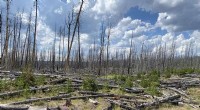
* Burning wood: When wood burns, it appears to disappear. However, the mass of the wood, oxygen, and the ashes combined is the same before and after the reaction. The wood and oxygen are converted into carbon dioxide, water vapor, and ash.
* Melting ice: When ice melts, it changes state from solid to liquid. The water molecules are the same, only their arrangement changes. The total mass of the ice is equal to the total mass of the water.
Important Note:
While matter cannot be created or destroyed, it can be transformed. This means that matter can change form, but its total mass remains constant.
Applications:
The law of conservation of matter is a fundamental principle in chemistry and physics. It is used to:
* Balance chemical equations.
* Predict the amount of reactants and products in a chemical reaction.
* Understand the processes of chemical reactions and physical changes.