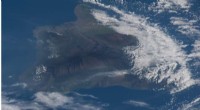
* Distance from Earth's Center: The higher you go, the farther you are from the Earth's center. Gravity is a force that pulls objects towards the center of the Earth. Since the force of gravity weakens with distance, an object will experience slightly less gravitational pull at the top of a mountain.
* Earth's Shape: The Earth is not a perfect sphere. It is slightly flattened at the poles and bulging at the equator. This means that the distance from the Earth's center to the surface is slightly greater at the equator than at the poles. As a result, an object will weigh slightly less at the equator than at the poles.
However, the difference in weight between the top of a mountain and sea level is very small. This is because mountains are relatively small compared to the radius of the Earth. The difference in weight is usually measured in fractions of a percent.
Here's an example:
* If an object weighs 100 pounds at sea level, it might weigh 99.9 pounds at the top of Mount Everest (approximately 29,000 feet high).
While the difference is negligible for everyday purposes, it is important in fields like surveying and geophysics, where precision measurements are essential.