Here's a breakdown of what affects a trajectory and some common types:
Factors Influencing Trajectory:
* Initial Velocity: The speed and direction the object starts with.
* Gravity: The force pulling the object downwards.
* Air Resistance: Friction from the air, slowing the object down and affecting its direction.
* Wind: Air currents that can push the object off course.
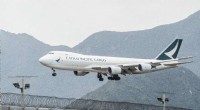
* Thrust (for powered objects): The force that propels the object forward (e.g., engines in airplanes).
Types of Trajectories:
* Projectile Motion: The path of an object thrown or launched, influenced primarily by gravity and air resistance. This is a classic example in physics and can be a parabola or a more complex curve depending on factors like initial velocity and air resistance.
* Ballistic Trajectory: Similar to projectile motion, but often used for projectiles with a high initial velocity, like missiles or artillery shells.
* Orbital Trajectory: The path of an object orbiting a celestial body, like a satellite orbiting Earth. This is influenced by gravity and the object's velocity.
* Curvilinear Trajectory: Any path that is not a straight line. This can include the paths of airplanes, birds, or even a ball thrown with a spin.
Understanding Trajectory is Crucial for:
* Sports: Analyzing the flight of a ball, understanding how to throw or kick for optimal results.
* Engineering: Designing aircraft, rockets, and other flying objects for efficient and safe flight.
* Military Applications: Calculating trajectories for missiles and artillery shells to hit their targets accurately.
* Astronomy: Studying the movement of celestial bodies and predicting their positions.
Let me know if you'd like to explore any of these aspects of trajectory in more detail!