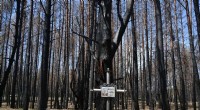
* Wood Burning: When you burn wood, you're not destroying the wood's mass, you're changing it. The wood reacts with oxygen in the air, producing carbon dioxide (CO2), water (H2O), and ash.
* Where the Mass Goes:
* CO2 and Water: The carbon dioxide is released into the atmosphere as a gas, and the water vaporizes and evaporates into the air.
* Ash: The ash is the leftover inorganic material, mainly minerals, that didn't burn. It represents a small portion of the wood's original mass.
The apparent "loss" of mass is due to the conversion of some of the wood's mass into invisible gases (CO2 and H2O). If you were to carefully measure the mass of the wood, the oxygen consumed during burning, and the mass of the ash, carbon dioxide, and water produced, you would find that the total mass before the reaction equals the total mass after the reaction.
Key point: The law of conservation of mass is still upheld because the mass has simply been transformed into different substances.