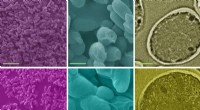
1. Cellular Organization: All living things are composed of one or more cells, the basic unit of life. These cells contain genetic material (DNA or RNA) and are enclosed by a membrane that separates the internal environment from the external world.
2. Metabolism: Living organisms carry out a complex set of chemical reactions to acquire and use energy, build and break down molecules, and maintain their structure. This includes processes like photosynthesis, respiration, and digestion.
3. Homeostasis: Living things maintain a stable internal environment, despite fluctuations in the external environment. This includes regulating temperature, pH, and other vital parameters.
4. Growth and Development: Living organisms increase in size and complexity over time. This can involve cell division, differentiation, and changes in form.
5. Reproduction: All living things are able to create new individuals, either through asexual or sexual reproduction. This ensures the continuity of life.
6. Response to Stimuli: Living organisms react to changes in their environment, such as light, temperature, or chemical signals. This allows them to adapt and survive.
7. Adaptation and Evolution: Living organisms have the capacity to change over time in response to environmental pressures. This process of evolution is driven by natural selection, where traits that enhance survival and reproduction become more common in a population.
8. Genetic Information: All living organisms contain DNA (or RNA in some viruses) that encodes their genetic information. This genetic material is passed on to offspring, ensuring the continuity of traits across generations.
9. Organization: Living things exhibit a hierarchical organization, from the level of atoms and molecules to cells, tissues, organs, organ systems, and the entire organism. This organization allows for specialized functions and coordinated activities.
It's important to note that these features are not necessarily exclusive to life on Earth. The discovery of extraterrestrial life might challenge some of these definitions. However, these features provide a solid basis for understanding the fundamental characteristics of life as we know it.