1. Evaporation: The sun heats water in oceans, lakes, rivers, and even soil, causing it to transform into water vapor and rise into the atmosphere.
2. Condensation: As the water vapor rises and cools, it condenses back into tiny water droplets, forming clouds.
3. Precipitation: When the droplets in clouds grow large enough, they fall back to Earth as rain, snow, sleet, or hail.
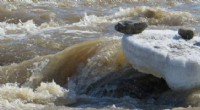
4. Surface Runoff: Precipitation that falls on land flows over the surface in rivers, streams, and channels.
5. Infiltration: Some precipitation soaks into the ground, becoming groundwater.
6. Groundwater Flow: Groundwater moves slowly through porous rock and soil layers, sometimes resurfacing in springs or seeping into rivers and lakes.
7. Transpiration: Plants absorb water through their roots and release it into the atmosphere as vapor through their leaves.
How Water Moves Through the Landscape:
* Gravity: A primary driver of water movement. Gravity pulls water downhill, causing surface runoff and groundwater flow.
* Solar Energy: Drives the water cycle by providing energy for evaporation.
* Wind: Influences cloud formation and precipitation patterns.
* Topography: The shape of the land influences where water flows.
* Soil Type: The permeability of the soil determines how much water infiltrates and how much runs off.
* Vegetation: Plants influence water movement through interception, transpiration, and their impact on soil permeability.
The Water Cycle's Importance:
* Provides freshwater: For drinking, agriculture, and industry.
* Regulates climate: Evaporation and condensation play a significant role in moderating Earth's temperature.
* Sculpts the landscape: Erosion and weathering by water shape rivers, canyons, and other landforms.
The movement of water through the landscape is a complex and interconnected process. Understanding how water moves is essential for managing water resources, protecting the environment, and adapting to climate change.