Earth's evolution is a vast and complex story spanning billions of years, marked by dramatic changes in its geology, atmosphere, oceans, and life. Here's a simplified overview:
Formation (4.54 Billion Years Ago):
* Earth formed from a swirling disk of dust and gas orbiting the young Sun.
* Intense heat and impacts from asteroids and meteorites melted the planet, forming a magma ocean.
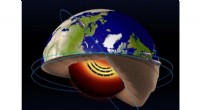
* Gravity pulled denser materials like iron to the core, forming Earth's layered structure.
Early Earth (4.54 - 4.0 Billion Years Ago):
* The planet cooled, and the first solid crust formed.
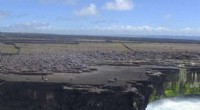
* Volcanic activity was intense, spewing gases like water vapor, carbon dioxide, and nitrogen, forming the early atmosphere.
* The first oceans formed from condensed water vapor.
* Evidence suggests life may have emerged as early as 4.0 billion years ago.
Hadean Eon (4.54 - 4.0 Billion Years Ago):
* This era was characterized by intense heat, bombardment from asteroids, and volcanic activity.
* The Earth's surface was likely molten and unstable.
* The first oceans and atmosphere began to form.
Archean Eon (4.0 - 2.5 Billion Years Ago):
* Earth cooled further, and the first continents began to emerge.
* The first life forms appeared, likely single-celled organisms called prokaryotes.
* Photosynthesis evolved, releasing oxygen into the atmosphere, gradually transforming the planet's environment.
Proterozoic Eon (2.5 Billion - 541 Million Years Ago):
* Oxygen levels in the atmosphere increased, leading to the evolution of more complex life forms, including eukaryotes.
* The first multicellular organisms appeared.
* Supercontinents formed and broke apart, shaping Earth's landmasses.
Phanerozoic Eon (541 Million Years Ago - Present):
* This eon is characterized by the "explosion" of life, with the appearance of diverse and complex organisms.
* The Cambrian Explosion (541 - 485 million years ago) saw the rapid diversification of life forms.
* Plants colonized land, followed by animals.
* The dinosaurs dominated the Earth for 180 million years, until their extinction around 66 million years ago.
* The rise of mammals and eventually humans.
Present and Future:
* Earth continues to evolve, driven by geological processes like plate tectonics, climate change, and the evolution of life.
* Human activities are now a significant force shaping the planet's future.
Key Points:
* Earth's evolution is a continuous process of change, driven by geological, atmospheric, and biological factors.
* The planet's early history was marked by intense heat, volcanic activity, and bombardment from space.
* The evolution of life played a crucial role in shaping Earth's environment, particularly the rise of oxygen.
* Earth is a dynamic and complex system, with a fascinating history and an uncertain future.
Further Exploration:
* Learn more about the geological timescale and the different eras of Earth's history.
* Explore the history of life on Earth, from the first single-celled organisms to the rise of humans.
* Investigate the ongoing impact of human activities on the planet, and the challenges we face in preserving our environment.