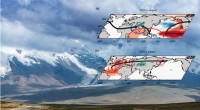
1. Glaciers and Ice Sheets: These are the most obvious indicator of a cold climate. Glaciers form when snow accumulates over time and compresses into ice. Ice sheets are massive glaciers that cover large areas of land.
2. Permafrost: This is a permanently frozen layer of soil that can be found in high-latitude regions and high-altitude areas. Permafrost is a strong indicator of a cold climate that experiences prolonged freezing temperatures.
3. Fjords: These are deep, narrow inlets of the sea that are carved out by glaciers. While not exclusive to cold climates, their presence strongly suggests a past glacial history and therefore a cold climate.
4. U-shaped Valleys: These are valleys that have been shaped by glaciers. They are characterized by steep sides and a relatively flat bottom, which is different from the V-shaped valleys created by rivers.
5. Cirques: These are bowl-shaped depressions in mountains that are carved out by glaciers. Cirques are often found at the head of glaciers.
6. Moraines: These are mounds of rock and debris that are deposited by glaciers. They can be found at the edges of glaciers, at the bottom of glaciers, or in the middle of glaciers.
7. Drumlins: These are elongated hills of glacial till that are shaped by the movement of glaciers.
8. Eskers: These are long, winding ridges of sand and gravel that are deposited by meltwater flowing beneath a glacier.
It's important to remember that these landforms can also be found in areas that have experienced past glacial activity, even if the climate is currently warmer.
Ultimately, a variety of landforms can indicate a cold climate, and the specific combination of landforms will vary depending on the specific location.