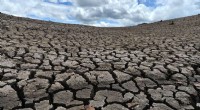
1. Finite Resources: The Earth has a limited supply of natural resources like minerals, fossil fuels, water, and fertile land. These resources are being consumed at an unsustainable rate, leading to depletion and scarcity.
2. Finite Space: The Earth has a fixed surface area, and this space is being increasingly occupied by human activity. This leads to competition for land use, habitat loss for other species, and environmental degradation.
3. Finite Carrying Capacity: The Earth can only support a finite number of individuals before it becomes unsustainable. This concept of carrying capacity considers the impact of a population on the environment, including resource depletion, pollution, and waste generation.
4. Finite Atmosphere: The Earth's atmosphere is a vital component of life, but it's also vulnerable. The concentration of greenhouse gases in the atmosphere is increasing, leading to climate change and its associated consequences.
5. Finite Biosphere: The Earth's biosphere, which encompasses all living things and their interactions, is also finite. Human activities like deforestation, pollution, and habitat destruction are contributing to biodiversity loss and ecosystem collapse.
The Finite Nature of Earth's Resources and Systems:
* It's crucial to understand that the Earth's resources and systems are finite. This means we need to act responsibly and sustainably to ensure that future generations can also thrive.
* We need to focus on conservation efforts, renewable energy sources, and efficient use of resources.
* It's important to recognize that our actions have consequences on the environment and the ability of the Earth to support life.
In conclusion, the Earth is finite in terms of resources, space, carrying capacity, atmosphere, and biosphere. It's our responsibility to be mindful of these limitations and strive to live in harmony with the planet for the well-being of current and future generations.