* Vegetation and Chlorophyll: Plants contain chlorophyll, which absorbs most wavelengths of light except for green light. This is why we see plants as green.
* Near-Infrared (NIR) Light: This wavelength of light (just beyond the visible spectrum) is reflected strongly by healthy vegetation. Chlorophyll doesn't absorb it well, causing it to be reflected back.
* Red Light: This is also strongly absorbed by chlorophyll, meaning very little red light is reflected back from healthy vegetation.
So, why does vegetation appear red in some remote sensing imagery?
It's not actually "red" in the true sense. It's usually a representation of how much near-infrared light is being reflected. This is because:
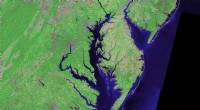
* False Color Composites: Remote sensing images often use false color composites, where different wavelengths are assigned different colors. This is done to highlight specific features. In many cases, NIR is assigned to red, making healthy vegetation appear red.
* Spectral Indices: Some spectral indices, like the Normalized Difference Vegetation Index (NDVI), are calculated using red and near-infrared bands. NDVI values are often displayed as a color scale, with high NDVI values (representing healthy vegetation) appearing red.
In short:
While vegetation doesn't truly reflect red light, remote sensing uses the strong near-infrared reflection from healthy plants to represent them as red in imagery and indices. This allows for easier identification and analysis of vegetation patterns.