Mention of the tundra prompts images of animals like the polar bear and vast, barren landscapes. While these images are true, a great deal more encompasses the tundra. The area is filled with plants and animals found nowhere else on the planet, despite being one of the harshest environments.
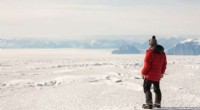
The arctic tundra exists only in the northern regions of the Earth, mostly north of the Arctic Circle. Arctic tundra is found in Canada, northern Alaska and the Siberian regions of Russia. The tundra is south of the area permanently covered by ice and north of the regions in which trees can grow. No tundras exist at southern latitudes. Alpine tundras exist throughout the world, wherever there are mountains tall enough that trees cannot grow at higher elevations.
There are two main types of tundra: the arctic tundra and the alpine tundra. The arctic tundra is by far the larger, in terms of land area. Circling the North Pole and extending over all land down to the northern limits of the tree line, the arctic tundra is made up of flat expanses of low-growing plants. With a short period (usually about 50 to 60 days) of temperatures above the freezing point, only a very brief growing season is possible in the arctic tundra. Alpine tundras exist on tall mountains, above the level where trees can grow. The altitude of this type of tundra is determined by the surrounding environment, but the features of low grasses and flowering plants are similar for all alpine tundras.
The tundra is first identified by its extremely cold temperatures. The landscapes of the tundra are shaped by frost, and the temperatures remain low throughout the year. Due to the harshness of the environment, there are no trees and little diversity of plant life. Soils are poor in the tundra and growing seasons are short. The natural population of the tundra varies drastically throughout the year.
Despite the cold and harsh environment, tundras are full of animal and plant life. Land animals of the tundra include the arctic fox, caribou, musk ox, lemming and polar bear. Among the many birds of the tundra are the gyrfalcon, rock ptarmigan, snowy owl and tundra swan. Plant life on the tundra tends to be hardy and stunted in height. Many of the plants grow between rocks, where they have some shelter from the elements; dark red leaves of the plants absorb as much sunlight as possible. Several types of grasses, lichens and flowering cushion plants live on the tundra.
Tundra life is also extremely susceptible to outside disturbance. Any destruction of groundcover results in the melting of the permafrost layer beneath the surface. Without the permafrost, the ground can collapse. Due to the short growing season, plant life in the tundra cannot easily rebound from any destruction. Degradation, therefore, lasts for years.