1. Natural Sciences:
* Focus: The study of the natural world, including its properties and laws.
* Branches:
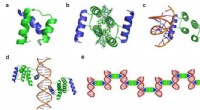
* Biology: The study of life and living organisms, including their structure, function, growth, origin, evolution, and distribution.
* Chemistry: The study of matter and its properties, as well as how matter changes.
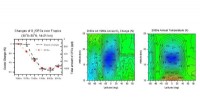
* Physics: The study of matter, energy, motion, and force.
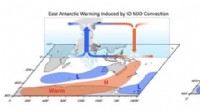
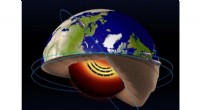
* Earth Science (or Geology): The study of the Earth's physical structure, history, and processes. This includes geology, meteorology, oceanography, and astronomy.
2. Social Sciences:
* Focus: The study of human society and its interactions.
* Branches:
* Anthropology: The study of human societies and their cultures, including their origins, development, and variations.
* Economics: The study of how people make decisions about scarce resources.
* Political Science: The study of government, power, and politics.
* Psychology: The study of the mind, behavior, and mental processes.
* Sociology: The study of human social relationships and institutions.
Beyond these two main categories, there are also other fields of science, such as:
* Formal Sciences: These deal with abstract systems, such as logic, mathematics, and computer science.
* Applied Sciences: These use scientific knowledge to solve practical problems, such as engineering, medicine, and agriculture.
It's important to remember that these categories are not always clear-cut. Many branches of science overlap, and new fields are constantly emerging. The way we organize science can change over time and for different purposes.