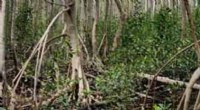
1. Carbon Sinks:
* Photosynthesis: Trees absorb carbon dioxide (CO2) from the atmosphere during photosynthesis, using it to grow and create their wood and leaves. This process removes significant amounts of CO2, a major greenhouse gas, from the air.
* Carbon Storage: Trees act as long-term storage units for carbon. The carbon stored in their wood, leaves, and roots can remain sequestered for centuries. This helps mitigate climate change by reducing the concentration of CO2 in the atmosphere.
* Deforestation Impacts: When forests are destroyed, the stored carbon is released back into the atmosphere, further accelerating climate change.
2. Water Cycle Regulation:
* Evapotranspiration: Trees release water vapor into the atmosphere through transpiration (from their leaves) and evaporation (from the soil). This water vapor condenses to form clouds and eventually falls as precipitation, replenishing the water cycle.
* Soil Protection: Forest canopies and root systems protect the soil from erosion, which helps maintain healthy watersheds and water quality.
* Flood Control: Forests can absorb large amounts of water, reducing the risk of flooding.
3. Oxygen Production:
* Photosynthesis: As a byproduct of photosynthesis, trees release oxygen into the atmosphere. This oxygen is essential for the survival of all living organisms.
* Air Quality: Forests filter pollutants from the air, including particulate matter and harmful gases. They help improve air quality and reduce respiratory illnesses.
In summary, forests are vital for a balanced atmosphere by:
* Absorbing and storing carbon dioxide, mitigating climate change
* Regulating the water cycle, supporting healthy ecosystems and watersheds
* Producing oxygen and improving air quality
Therefore, protecting and restoring forests is essential for maintaining a healthy and sustainable planet.