1. Spatial Relationships and Patterns:
* Ecology: Geography helps understand how different ecosystems are distributed, how they interact with each other, and how environmental factors influence their distribution.
* Climate Science: Studying geographic patterns of temperature, precipitation, and other climate variables allows scientists to understand climate change, predict its effects, and develop mitigation strategies.
* Epidemiology: Geographers help identify areas with higher risks of disease outbreaks, analyze the spread of infectious diseases, and develop public health interventions.
2. Human-Environment Interactions:
* Geography of Development: Understanding the spatial distribution of resources, infrastructure, and economic activities helps in developing sustainable development strategies.
* Urban Planning: Geographers help plan and manage urban spaces, considering factors like population growth, transportation, and environmental sustainability.
* Environmental Management: Geographic analysis is crucial for understanding the impact of human activities on the environment, identifying areas at risk, and developing solutions for environmental problems.
3. Earth System Science:
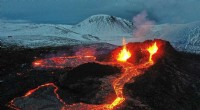
* Geology: Geographic information is essential for mapping geological features, understanding plate tectonics, and predicting natural disasters.
* Oceanography: Geographers study the distribution of ocean currents, marine life, and other oceanographic features to understand ocean circulation and its impact on climate.
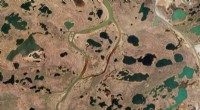
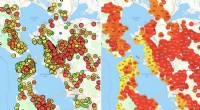
* Remote Sensing and GIS: Geographic information systems (GIS) and remote sensing technologies enable scientists to analyze spatial data from satellites and other sources, providing insights into various aspects of the Earth system.
4. Historical and Cultural Perspectives:
* Archaeology: Geography helps in locating and interpreting archaeological sites, understanding the spatial distribution of past civilizations, and reconstructing historical events.
* Anthropology: Geographers contribute to understanding human migration patterns, cultural interactions, and the spatial distribution of different cultures.
5. Interdisciplinary Research:
* Geography plays a vital role in interdisciplinary research, connecting various scientific fields and providing a comprehensive perspective on complex issues.
* Climate change, biodiversity conservation, and sustainable development are examples of areas where geography contributes significantly to understanding and solving global challenges.
In conclusion, geography is not just about maps and locations; it is a critical field that provides valuable insights into the interconnectedness of the Earth system and its inhabitants. Scientists across various disciplines utilize geographic knowledge and tools to advance their research and contribute to solving global challenges.