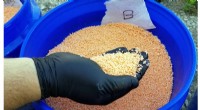
Loess is a fine-grained, yellowish-brown sediment that is transported by wind and deposited in thick layers. It's typically made up of quartz, feldspar, and other minerals.
Here are some key characteristics of loess:
* Fine-grained: Loess particles are very small, typically less than 0.05 mm in diameter.
* Unconsolidated: Loess is not cemented together, making it easily eroded.
* Porous: The loose structure of loess allows it to hold water well.
* Fertile: The minerals in loess make it excellent soil for agriculture.
Loess deposits are found in many parts of the world, including:
* China: The Loess Plateau in China is one of the largest and most famous loess deposits in the world.
* North America: Loess deposits are found in the Midwest and Great Plains of the United States.
* Europe: Loess deposits are found in Germany, France, and other parts of Europe.
Loess is important for a variety of reasons, including:
* Agriculture: Its fertility makes it ideal for growing crops.
* Construction: Loess is sometimes used as a building material.
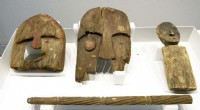
* Archaeology: Loess deposits can preserve archaeological artifacts.
So, the next time you see a landscape blanketed in fine, yellowish-brown sediment, you know it's probably loess!