Life Science (Biology)
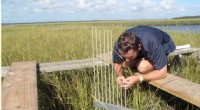
* Focus: Living organisms and their interactions with each other and their environment.
* Areas of Study:
* Organisms: Structure, function, growth, reproduction, evolution of all living things (from bacteria to plants and animals).
* Cellular Biology: The building blocks of life (cells) and their processes.
* Genetics: The study of heredity and genetic information.
* Ecology: The interactions between organisms and their environment.
* Evolution: The process of change in living organisms over time.
* Methodology: Experiments, observations, and data analysis often focus on individual organisms or populations.
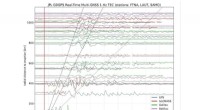
Earth Science (Geology, Oceanography, Meteorology, etc.)
* Focus: The Earth, its composition, structure, processes, and history.
* Areas of Study:
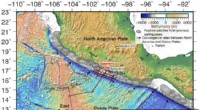
* Geology: Rocks, minerals, the Earth's interior, and the processes that shape its surface (like plate tectonics and erosion).
* Oceanography: Oceans, their physical and chemical properties, marine life, and the interactions between oceans and the atmosphere.
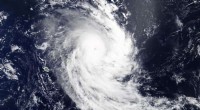
* Meteorology: The Earth's atmosphere, weather, and climate.
* Astronomy: The study of celestial objects and the universe.
* Methodology: Field observations, analysis of rock samples, data collection from satellites, and computer simulations.
Interconnections
* Life on Earth: Life science relies on the Earth to provide the environment necessary for life.
* Earth's History: Earth science provides insights into the history of life and the evolution of organisms.
* Environmental Interactions: Both fields study the interactions between living organisms and their environment.
* Climate Change: Both life science and Earth science are crucial for understanding and mitigating the effects of climate change.
In essence:
* Life science focuses on living things and their processes.
* Earth science focuses on the Earth itself and its physical processes.
These fields are closely intertwined, and advancements in one often lead to advancements in the other.