1. Biodiversity Loss:
* Rainforests are home to an estimated 50% of Earth's plant and animal species, many of which are yet to be discovered.
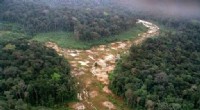
* Deforestation leads to habitat loss, fragmentation, and extinction of countless species, disrupting vital ecological processes.
* Loss of biodiversity weakens ecosystems, making them less resilient to disturbances and impacting food webs.
2. Climate Change:
* Rainforests act as massive carbon sinks, absorbing and storing vast amounts of atmospheric carbon dioxide.
* Deforestation releases this stored carbon back into the atmosphere, accelerating climate change.
* Reduced rainforest cover diminishes the planet's ability to regulate climate, leading to extreme weather events, rising temperatures, and sea levels.
3. Water Cycle Disruption:
* Rainforests play a crucial role in the global water cycle, regulating rainfall patterns and water availability.
* Deforestation disrupts this process, leading to reduced rainfall, increased droughts, and water scarcity in surrounding areas.
* This impacts human populations reliant on forest-dependent water sources and threatens agriculture.
4. Soil Degradation:
* Rainforest soils are highly fertile and fragile, dependent on the forest canopy for protection and nutrient cycling.
* Deforestation exposes these soils to erosion, leaching, and compaction, reducing their fertility and agricultural potential.
* This can lead to land degradation, desertification, and reduced food security.
5. Indigenous Communities:
* Rainforests are home to millions of indigenous people whose livelihoods, cultures, and traditions are inextricably linked to the forest.
* Deforestation displaces these communities, destroys their traditional knowledge, and undermines their food security and cultural identity.
6. Medical Discoveries:
* Rainforests are a vast source of undiscovered medicinal plants and other resources with potential for human health benefits.
* Deforestation hinders research and development in these areas, potentially limiting future discoveries in medicine and pharmaceuticals.
7. Economic Impacts:
* Deforestation can lead to economic losses, including reduced tourism, timber revenue, and ecosystem services.
* It also contributes to conflicts over land use, poverty, and social instability.
In conclusion, the gradual loss of rainforests has profound and interconnected consequences for biodiversity, climate, water resources, soil health, indigenous communities, and human well-being. Addressing this issue requires global collaboration, sustainable forest management practices, and a shift towards a more environmentally responsible approach to land use.