1. Seismic Waves:
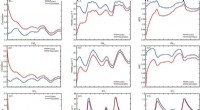
* Earthquakes: When earthquakes occur, they generate seismic waves that travel through the Earth. These waves act like sound waves, but they travel through solid rock, liquid, and even the Earth's core.
* Seismometers: These instruments measure the arrival times and characteristics of seismic waves at various locations around the world.
* Interpretation: By analyzing the speed and direction of seismic waves as they travel through the Earth, scientists can deduce the composition and density of different layers. Some waves are reflected or refracted at boundaries between layers, revealing their location and properties.
2. Gravity and Magnetic Fields:
* Variations in Gravity: The Earth's gravity is not uniform. Slight variations in gravity can be measured with highly sensitive instruments, revealing the density and composition of the underlying rock.
* Magnetic Field: The Earth's magnetic field is generated deep within its core. Measurements of the magnetic field strength and direction provide clues about the composition and flow of the Earth's core.
3. Heat Flow:
* Geothermal Gradient: Temperature increases with depth inside the Earth. Measuring the heat flow from the Earth's surface provides information about the heat source in the Earth's core and the composition of the mantle.
4. Volcanoes and Rocks:
* Volcanic Eruptions: Volcanic eruptions bring up molten rock (magma) from the Earth's mantle. Analyzing the composition of volcanic rocks provides insights into the composition and temperature of the mantle.
* Deeply Buried Rocks: Occasionally, tectonic processes bring rocks from deep within the Earth to the surface. Studying these rocks, called xenoliths, provides direct evidence of the composition and pressure conditions of the Earth's interior.
5. Experiments:
* High-pressure and High-temperature Experiments: Scientists conduct experiments in laboratories that simulate the extreme conditions found deep within the Earth. These experiments allow researchers to understand how rocks behave at depth and to test theories about the Earth's interior.
Combining Evidence:
By combining these various lines of evidence, scientists have developed a detailed model of the Earth's interior, including its layers (crust, mantle, outer core, inner core), their composition, and their properties.
It's important to note: Our understanding of the Earth's interior is constantly evolving as new technologies and data analysis techniques become available.