1. Root Wedging:
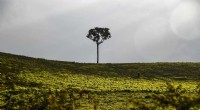
- Tree roots grow into cracks in rocks and expand as they grow larger.
- This expansion exerts pressure on the rock, widening cracks and eventually breaking the rock apart.
2. Acid Production:
- Plants release organic acids through their roots, which can dissolve minerals in the rock.
- This chemical reaction weakens the rock, making it more susceptible to other forms of weathering.
- Lichens, a symbiotic partnership of fungi and algae, are particularly effective at producing acids that break down rock.
3. Erosion:
- Vegetation can trap soil and debris, preventing it from being carried away by wind and water.
- However, vegetation can also contribute to erosion by increasing the rate of runoff and the amount of water that infiltrates the soil.
4. Organic Matter Accumulation:
- Decaying plant matter forms humus, which is a rich organic material that can alter the soil's chemical composition.
- This can lead to the formation of acids, which can contribute to chemical weathering.
Examples of vegetation-induced weathering:
* Tree roots growing on cliff faces can cause large boulders to fall.
* Lichens growing on rocks can create a distinctive "lichen crust" that weakens the rock and helps it break down.
* Grasslands can help prevent erosion but can also contribute to the formation of gullies in areas with heavy rainfall.
Overall, vegetation can be a significant contributor to weathering, both directly through physical and chemical processes and indirectly by altering soil properties and promoting erosion.