Similarities:
* Focus on the natural world: Both disciplines investigate the natural world, seeking to understand its processes and phenomena.
* Use of scientific methods: Both rely heavily on the scientific method to collect data, form hypotheses, conduct experiments, and draw conclusions.
* Interdisciplinary: Both fields often overlap and rely on principles and concepts from other sciences, like chemistry, physics, and biology.
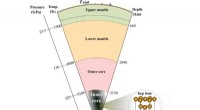
* Understanding the Earth: Earth science specifically focuses on Earth, its processes, and its history, while physical science provides the foundational knowledge and tools to understand these processes.
Differences:
* Scope: Physical science is a broader term encompassing physics, chemistry, and astronomy, while Earth science specifically focuses on Earth and its systems (atmosphere, hydrosphere, geosphere, and biosphere).
* Focus: Physical science explores fundamental laws and principles governing the universe, while Earth science applies these principles to understand Earth's unique features and processes.
* Examples: Physical science studies concepts like gravity, energy, and matter, while Earth science explores topics like plate tectonics, weather patterns, and geological formations.
Think of it like this:
* Physical science is the toolbox. It provides the tools and knowledge to understand the universe.
* Earth science is the builder. It uses the tools of physical science to construct a picture of Earth and its history.
In summary:
* Earth science is a specialized branch of physical science, focusing on Earth-specific phenomena.
* Physical science provides the foundational knowledge that underpins Earth science.
* Both fields rely on scientific methods and contribute to our understanding of the natural world.