Earth Science:
1. Geology:
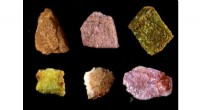
* Studying rock formations: Identifying different types of rocks (igneous, sedimentary, metamorphic), understanding how they formed, and their ages.
* Plate tectonics: Investigating how Earth's plates move and interact, leading to earthquakes, volcanoes, and mountain formation.
* Mineral exploration: Analyzing the composition of Earth's crust to locate and extract valuable minerals.
2. Meteorology:
* Weather forecasting: Predicting weather patterns using data from satellites, weather balloons, and ground stations.
* Climate change research: Studying long-term changes in the Earth's climate, their causes, and potential impacts.
* Hurricane tracking: Monitoring hurricane formation and movement, issuing warnings, and studying their effects.
3. Oceanography:
* Marine biology: Exploring the diverse life forms in oceans, studying their ecosystems, and understanding their interactions.
* Ocean currents: Studying how ocean currents move and influence weather patterns, climate, and marine life.
* Seafloor mapping: Creating detailed maps of the ocean floor to understand its geological features and resources.
4. Hydrology:
* Water cycle studies: Understanding how water moves through the Earth's systems, including evaporation, precipitation, and groundwater flow.
* Flood prediction: Analyzing rainfall patterns and river flow to predict and mitigate flooding risks.
* Water resource management: Assessing and managing water resources for drinking, agriculture, and industrial uses.
Space Science:
1. Astronomy:
* Studying stars and galaxies: Observing and analyzing celestial objects like stars, planets, galaxies, and nebulae.
* Cosmology: Investigating the origin, evolution, and structure of the universe.
* Exoplanet exploration: Searching for and studying planets orbiting other stars.
2. Astrophysics:
* Understanding stellar evolution: Investigating the life cycle of stars, from their birth to their death.
* Black hole research: Studying the properties and behavior of black holes, their gravitational pull, and their role in the universe.
* Supernova studies: Investigating the explosive death of stars and their role in creating new elements.
3. Planetary science:
* Studying planets and moons: Analyzing the composition, atmosphere, and surface features of planets in our solar system and beyond.
* Spacecraft missions: Sending probes to explore planets, moons, and other celestial bodies.
* Searching for life beyond Earth: Exploring potential signs of life on other planets and moons.
These are just a few examples, and the field of Earth and space science is constantly evolving with new discoveries and technologies.