Here's a breakdown:
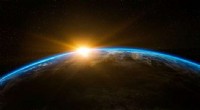
* Theoretically, the farthest object a person can see is the horizon**. This is because the Earth is a sphere, and our line of sight is limited by its curvature. On a perfectly flat surface, you could theoretically see infinitely far. But on Earth, the horizon is determined by your height and the curvature of the Earth. The higher you are, the farther the horizon.
* Practically, the furthest object a person can see is limited by atmospheric conditions. Dust, haze, and atmospheric refraction can all distort and scatter light, making distant objects harder to see. This is why on a clear day with good visibility, you can see further than on a hazy day.
For a more specific answer, let's consider some examples:
* On a clear day at sea level, the average person can see about 3 miles (4.8 km) to the horizon.
* From the top of Mount Everest, the highest point on Earth, the horizon extends about 230 miles (370 km).
* With exceptional eyesight and optimal conditions, someone could potentially see a very bright object, like a distant mountain range, up to 100 miles (160 km) away.
But, seeing something at that distance might not be the same as clearly "identifying" it. The object might just appear as a faint smudge on the horizon.
To summarize:
* The furthest object a person can see is limited by the horizon, which is determined by their height and the Earth's curvature.
* Atmospheric conditions drastically affect visibility.
* It's difficult to say definitively what the "farthest object" is, as it depends on how we define "seeing" and "object."