Composition and Structure:
* No oceans or atmosphere: Protoearth was a hot, molten ball of rock and metal. It didn't have the liquid water oceans or the protective atmosphere we have now.
* No continents: The surface of Protoearth was a homogenous, molten mass without any distinct landmasses.
* Different composition: The composition of Protoearth was more primitive, with a higher abundance of volatile elements like hydrogen and helium, which were gradually lost to space due to the lack of gravity.
Size and Shape:
* Smaller and less dense: Protoearth was smaller than today's Earth and had a lower density due to the lack of a solid core.
* Irregular shape: The early Earth likely had an irregular shape, unlike the nearly spherical shape we have today.
Orbit and Rotation:
* Different orbital path: Protoearth's orbit around the Sun was likely more eccentric and unstable than today's.
* Faster rotation: Protoearth probably had a much faster rotation period than Earth today.
Life and Environment:
* No life: Obviously, there was no life on Protoearth. The extreme heat and lack of water made it an uninhabitable environment.
* Constant bombardment: Protoearth was constantly bombarded by asteroids, comets, and other debris left over from the formation of the solar system. This bombardment contributed to the heat and volatility of the early Earth.
The Transformation to Earth:
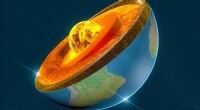
Over millions of years, the bombardment gradually slowed down, allowing the Earth to cool and solidify. The heavier elements sank to the core, forming a solid inner core and a liquid outer core. This process led to the formation of the Earth's magnetic field, which protected the planet from harmful solar radiation. Volcanic activity released gases that formed the early atmosphere, and eventually, water vapor condensed to form the first oceans. These changes paved the way for the evolution of life on Earth.
In conclusion, Protoearth was a very different world from the Earth we know today. It was a hot, volatile, and chaotic environment, constantly bombarded by space debris. The transformation from Protoearth to the Earth we live on was a long and complex process, involving cooling, solidification, and the formation of oceans, atmosphere, and continents. This dramatic change in the environment eventually paved the way for the emergence of life on our planet.