1. Crust:
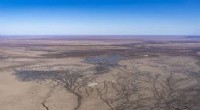
* The outermost layer, like the skin of an apple.
* Thin, rocky, and brittle.
* Two types:
* Continental crust: Thicker, less dense, makes up landmasses.
* Oceanic crust: Thinner, denser, makes up ocean floors.
2. Mantle:
* The largest layer, making up about 84% of Earth's volume.
* Mostly solid, but behaves like a very viscous fluid over long periods.
* Composed of silicate minerals.
* Convection currents within the mantle drive plate tectonics.
3. Outer Core:
* Liquid layer of iron and nickel.
* Extremely hot, generating Earth's magnetic field.
4. Inner Core:
* Solid ball of iron and nickel.
* Extremely hot and under immense pressure.
In summary:
* Solid crust: where we live and interact with the Earth.
* Semi-solid mantle: drives plate tectonics and volcanic activity.
* Liquid outer core: creates the magnetic field.
* Solid inner core: a hot, dense ball of iron and nickel.
This layered structure gives Earth its unique properties and contributes to processes like plate tectonics, volcanism, and the existence of a protective magnetic field.