* Plate tectonics: The study of the Earth's crust and its movement, which causes earthquakes, volcanoes, and mountain formation.
* Seismology: The study of earthquakes and the structure of the Earth's interior.
* Volcanology: The study of volcanoes, their eruptions, and the impact on the environment.
* Geodesy: The study of the Earth's shape, gravity field, and rotation.
* Geochronology: The study of the age of rocks and minerals, which helps us understand the history of the Earth.
* Hydrology: The study of water, its movement, and its interaction with the Earth.
* Meteorology: The study of the Earth's atmosphere, including weather and climate.
* Oceanography: The study of the oceans, their currents, and their impact on the Earth.
* Glaciology: The study of glaciers and their role in climate change.
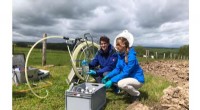
Geophysicists use a variety of tools and techniques to study the Earth, including:
* Seismic waves: Used to map the Earth's interior.
* Gravity measurements: Used to study the distribution of mass within the Earth.
* Magnetic measurements: Used to study the Earth's magnetic field.
* Remote sensing: Using satellites and other instruments to collect data from space.
* Laboratory experiments: Used to study the physical and chemical properties of Earth materials.
Geophysics is a crucial field for understanding our planet and addressing important issues such as natural disasters, climate change, and resource management.