Here's why:
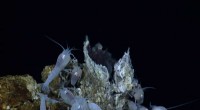
* No sunlight reaches these depths: Hydrothermal vents are located on the ocean floor, miles below the surface. Sunlight cannot penetrate to these depths.
* Chemosynthesis: These organisms have adapted to use chemicals, like hydrogen sulfide, released from the vents as their energy source. This process is called chemosynthesis, and it's a completely independent energy pathway from photosynthesis.
* Examples: Some common hydrothermal vent organisms include tubeworms, giant clams, and specialized bacteria.
Other organisms that can survive without sunlight:
* Cave-dwelling organisms: Some organisms live in caves or other dark environments and have evolved to survive without sunlight. These organisms may rely on food sources like bat guano or other organic matter.
* Some fungi: Some fungi are saprotrophic, meaning they feed on dead organic matter, and do not need sunlight.
* Some bacteria: Certain bacteria are chemoautotrophs, meaning they can derive energy from inorganic compounds like sulfur or iron.
While these organisms can survive without sunlight, they often have specific adaptations that allow them to thrive in their unique environments.