Stars:
* The most common and obvious example.
* Produce light and heat through nuclear fusion in their core.
Planets:
* While planets don't produce their own light, they reflect light from stars.
* Some planets like Venus and Jupiter have very reflective atmospheres, making them appear bright.
Moons:
* Like planets, moons reflect light from stars (or their host planets).
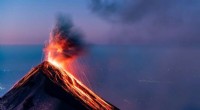
* Some moons, like Jupiter's moon Io, are volcanically active and emit their own faint light.
Comets:
* These icy bodies, when they approach the Sun, release gases and dust that reflect sunlight, creating a bright tail.
* Some comets also emit their own faint light through chemical reactions.
Supernovae:
* The incredibly bright explosions of dying stars.
* Emit vast amounts of light and energy for a short period.
Pulsars:
* Rapidly rotating neutron stars that emit beams of radiation.
* These beams can be detected as pulses of light from Earth.
Quasars:
* Extremely bright, distant objects powered by supermassive black holes at the center of galaxies.
* They emit a vast amount of light across the electromagnetic spectrum.
Auroras:
* Colorful displays of light in the sky caused by charged particles from the Sun interacting with Earth's atmosphere.
* While not a luminous body in the traditional sense, they are a beautiful example of natural light phenomena.
Bioluminescence:
* Some living organisms produce their own light through chemical reactions.
* Examples include fireflies, jellyfish, and certain deep-sea creatures.
It's important to note that "luminous body" can have different interpretations. Some may consider only objects that produce their own light, while others may include objects that reflect light or emit light through other processes.