Nature is a complex system governed by a multitude of interacting factors. While we can't fully understand everything, we can offer logical explanations for many natural events based on established scientific principles:
1. Physical Laws:
* Gravity: The force that attracts objects with mass, responsible for things like falling objects, tides, and planetary orbits.
* Electromagnetism: Forces related to electric charges and magnetic fields, explaining phenomena like lightning, magnetism, and light.
* Thermodynamics: Describes how energy is transferred and transformed, explaining things like heat transfer, weather patterns, and the formation of stars.
2. Chemical Reactions:
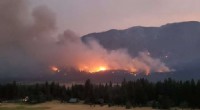
* Combustion: The rapid chemical reaction between a substance and an oxidant, releasing energy and producing heat and light (like fire).
* Photosynthesis: The process plants use to convert sunlight into chemical energy, forming the foundation of many ecosystems.
* Weathering: The breakdown of rocks and minerals through chemical and physical processes, shaping landscapes and influencing soil formation.
3. Biological Processes:
* Evolution: The gradual change in the genetic makeup of populations over time, leading to diverse species and adaptations to various environments.
* Ecosystem Dynamics: The interactions between living organisms and their physical environment, influencing population dynamics, food webs, and energy flow.
* Natural Selection: The differential survival and reproduction of individuals based on their traits, driving evolutionary adaptation and diversity.
4. Geological Processes:
* Plate Tectonics: The movement of Earth's crustal plates, causing earthquakes, volcanic eruptions, and mountain formation.
* Erosion: The gradual wearing away of rock and soil by natural forces like wind, water, and ice, shaping landscapes and creating unique features.
* Weathering: The breakdown of rock and minerals through chemical and physical processes, contributing to soil formation and influencing landscape evolution.
5. Astronomical Phenomena:
* Lunar Phases: The apparent changes in the Moon's shape as it orbits the Earth, caused by the varying angles of sunlight reflected from its surface.
* Solar Eclipses: The temporary obscuring of the Sun by the Moon, occurring when the Moon aligns between the Earth and the Sun.
* Seasons: The cyclic changes in weather patterns caused by the tilt of Earth's axis and its orbit around the Sun.
It's crucial to note that:
* These explanations are based on scientific observations and are constantly refined as we learn more.
* There are still many events in nature that we don't fully understand, and new discoveries are constantly being made.
* There are many ways to explain natural phenomena, and different disciplines often offer unique perspectives.
By combining logic, observation, and scientific principles, we can gradually unravel the mysteries of nature and appreciate its intricate workings.