1. Observation:
* Description: This method involves carefully observing and recording patterns and processes in nature without manipulating any variables. It is often the first step in ecological research, helping scientists gather baseline data and identify potential relationships.
* Examples:
* Field surveys: Counting the number of birds in a particular habitat.
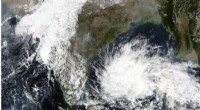
* Remote sensing: Using satellite imagery to track deforestation over time.
* Long-term monitoring: Tracking changes in population size or species composition over decades.
* Advantages: Provides a detailed understanding of natural systems and their complexities.
* Disadvantages: Can be time-consuming and resource-intensive, and it can be difficult to establish cause-and-effect relationships from observational data alone.
2. Experimentation:
* Description: This method involves manipulating one or more variables in a controlled setting to test hypotheses about cause-and-effect relationships. Experiments allow scientists to isolate the effects of specific factors on ecological processes.
* Examples:
* Laboratory experiments: Studying the effects of different levels of nutrient availability on plant growth.
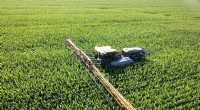
* Field experiments: Testing the impact of herbicide application on insect populations.
* Mesocosm experiments: Studying the effects of climate change on aquatic ecosystems in controlled, but realistic environments.
* Advantages: Provides strong evidence for cause-and-effect relationships.
* Disadvantages: Can be expensive and time-consuming, and the results may not always be generalizable to real-world conditions.
3. Modeling:
* Description: This method involves creating mathematical or computer models to simulate ecological processes and make predictions about how ecosystems will respond to changes. Models can be used to test hypotheses, explore complex interactions, and make predictions about future scenarios.
* Examples:
* Population models: Predicting the growth or decline of a species based on factors such as birth rates, death rates, and migration.
* Climate change models: Simulating the effects of rising temperatures and changing precipitation patterns on ecosystems.
* Food web models: Studying the interactions between different species in an ecosystem.
* Advantages: Allows scientists to explore complex scenarios and test hypotheses without needing to conduct costly and time-consuming experiments.
* Disadvantages: Models are only as good as the data they are based on, and they can be difficult to validate.
These three methods often complement each other, with observational studies providing initial data, experiments testing specific hypotheses, and models integrating and predicting the overall behavior of ecological systems. This combined approach allows scientists to develop a more comprehensive understanding of the complex interactions within ecosystems.