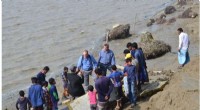
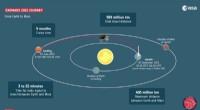
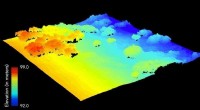
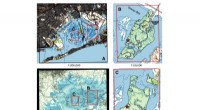
* Observation is the first step in the scientific method: Science is all about understanding the natural world. To do that, we must first observe what's happening. This can involve using our senses, tools like microscopes, or complex instruments like telescopes.
* Observations lead to questions: When we observe something interesting, we naturally start asking questions. Why does this happen? How does this work? This curiosity drives scientific exploration.
* Observations can lead to hypotheses: Based on our observations, we can formulate hypotheses, or educated guesses, about what's happening. These hypotheses can then be tested through experiments.
* Observations help us interpret data: We don't just observe in isolation. We analyze what we see and try to understand the patterns and connections. This leads to the formulation of theories that can explain natural phenomena.
In short, looking around the world is not a science in itself, but it's the starting point for the scientific process. By observing, questioning, and investigating, we can gain a deeper understanding of the universe around us.