It's important to note that this is a theory, not a proven fact. There's no definitive evidence of how abiogenesis occurred, but there are several promising hypotheses that are being investigated. These hypotheses involve a series of steps, starting with the formation of simple organic molecules from inorganic matter, followed by the self-assembly of these molecules into more complex structures, and eventually the emergence of the first living cells.
Here's a breakdown of key concepts related to abiogenesis:
* Spontaneous Generation: This was an older, disproven theory that suggested living organisms could arise directly from non-living matter, like maggots appearing in rotting meat. It was refuted by experiments like those of Louis Pasteur.
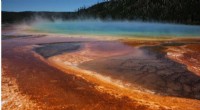
* Primordial Soup: This theory suggests that life arose in a "soup" of organic molecules in the early Earth's oceans. This soup was likely formed from the interaction of inorganic molecules with energy sources like lightning and volcanic activity.
* RNA World Hypothesis: This proposes that RNA, not DNA, was the primary form of genetic material in early life. RNA has a simpler structure than DNA and can act as both a carrier of genetic information and a catalytic enzyme.
* Hydrothermal Vent Theory: This theory suggests that life may have originated in deep-sea hydrothermal vents, which release chemicals from the Earth's interior. These vents provide both energy and a source of inorganic molecules necessary for life.
While the exact details of abiogenesis remain elusive, scientists continue to study the origin of life through experimentation and observation. This ongoing research aims to understand the fundamental processes that led to the emergence of the first living organisms from non-living matter.