Here's a breakdown of what makes a claim scientific:
* About the Natural World: The claim must relate to observable phenomena, not opinions, beliefs, or supernatural concepts.
* Testable: There must be a way to design experiments or observations to gather evidence that supports or contradicts the claim.
* Falsifiable: The claim must be structured in a way that it could be proven wrong. If there's no way to disprove it, it's not a scientific claim.
Examples of Scientific Claims:
* "Gravity causes objects to fall to the ground." This is testable (we can drop objects) and falsifiable (if objects floated upwards, the claim would be wrong).
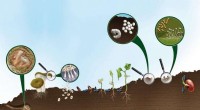
* "Plants need sunlight to grow." This is testable (we can compare plants grown in light vs. darkness) and falsifiable (if plants grew perfectly well in complete darkness, the claim would be wrong).
Examples of Non-Scientific Claims:
* "Ghosts are real." This is difficult to test and almost impossible to falsify (even if we don't see a ghost, believers might argue they're simply invisible).
* "Chocolate is the best flavor." This is an opinion, not a statement about the natural world.
Important Notes:
* Scientific claims are not guaranteed to be true. They are constantly tested and refined based on new evidence.
* A scientific claim must be supported by evidence gathered through rigorous scientific methods, such as controlled experiments and careful observation.
* The process of science involves questioning, testing, and refining claims, leading to a deeper understanding of the natural world.