Objectivity in science is a goal, not an absolute:
* Human perception is subjective: Our senses and brains interpret the world based on individual experiences, biases, and expectations. This can influence how we perceive and interpret observations.
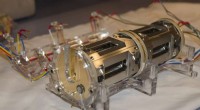
* Instruments are designed and operated by humans: Scientific instruments are designed and used by humans, and their design and operation can introduce biases. For example, a microscope might only capture certain wavelengths of light, influencing our understanding of the observed object.
* Theories influence observations: Our understanding of the world is shaped by existing scientific theories. We tend to look for and interpret observations that fit with these theories, potentially overlooking contradictory evidence.
However, science has mechanisms to mitigate these biases:
* Standardized methods: Scientific experiments use standardized methods and controlled environments to minimize the impact of individual biases. This allows for replication and verification by other scientists.
* Peer review: Scientific findings are reviewed by other experts in the field, who can identify potential biases and ensure that the research meets rigorous standards.
* Emphasis on reproducibility: A key tenet of science is the ability for others to replicate the results of an experiment. This helps to eliminate subjective biases that might have affected the original findings.
* Constant questioning and revision: Science is a dynamic process of questioning, testing, and refining our understanding of the world. This ongoing process helps to weed out biased observations and develop more accurate models.
In conclusion:
Scientific observations are not perfectly objective, but they strive to be as objective as possible through rigorous methods, peer review, and a commitment to reproducibility. While human subjectivity cannot be entirely eliminated, science employs numerous mechanisms to minimize its impact. It's important to remember that scientific knowledge is always evolving as new observations and evidence emerge.