1. Observation & Field Studies:
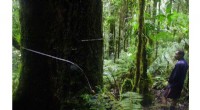
* Direct Observation: This involves carefully observing trees and plants in their natural environment, recording their physical characteristics, growth patterns, and interactions with other organisms.
* Transects & Plots: Scientists often use transects (straight lines through a habitat) or plots (defined areas) to systematically sample and collect data on trees and plants. This allows for comparisons across different locations or over time.
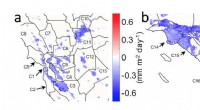
* Remote Sensing: Satellites and aerial photography can be used to study large-scale patterns of forest cover, tree growth, and deforestation.
2. Experimentation:
* Controlled Experiments: Scientists can manipulate environmental factors like temperature, light, water availability, and nutrient levels in controlled settings to study how these factors affect plant growth and physiology.
* Field Experiments: These involve manipulating factors in natural settings, allowing researchers to study the effects of treatments on tree and plant populations in real-world conditions.
3. Molecular & Genetic Analysis:
* DNA Sequencing: Scientists can extract DNA from trees and plants to study their genetic makeup, identify species, and investigate evolutionary relationships.
* Gene Expression Analysis: This technique helps researchers understand which genes are active in response to different environmental stimuli, revealing the molecular mechanisms behind plant growth and development.
4. Physiological Measurements:
* Gas Exchange Measurements: Scientists can measure the rate of photosynthesis, respiration, and water use in trees and plants, providing insights into their metabolic processes and resource use.
* Sap Flow Measurements: This technique monitors the movement of water through trees, revealing important information about water uptake and transpiration.
* Dendrochronology: By analyzing the growth rings in tree trunks, scientists can reconstruct past environmental conditions and climate change.
5. Modeling & Simulation:
* Computer Models: Scientists use mathematical models to simulate plant growth, predict the effects of environmental changes, and optimize forestry practices.
6. Data Analysis & Interpretation:
* Statistical Analysis: Scientists use statistical methods to analyze data collected from observations, experiments, and measurements, to identify patterns and draw conclusions.
* Data Visualization: Graphs, maps, and other visual representations help scientists communicate their findings and insights to others.
Examples of Scientific Questions About Trees & Plants:
* How do trees adapt to climate change?
* How do different species of plants interact in a forest ecosystem?
* What are the effects of deforestation on biodiversity?
* How can we improve the efficiency of photosynthesis in crops?
* What are the genetic mechanisms underlying disease resistance in plants?
By combining these diverse approaches, scientists can deepen our understanding of trees and plants, their role in ecosystems, and their importance to human well-being.