Here's the process:
1. CO2 dissolves in water: CO2 from the atmosphere dissolves in rainwater and other bodies of water.
2. Formation of carbonic acid: The dissolved CO2 reacts with water to form carbonic acid (H2CO3). This reaction is reversible and is described by the following equilibrium:
CO2(aq) + H2O(l) ⇌ H2CO3(aq)
Key points:
* The equilibrium lies heavily towards CO2 and water, meaning most dissolved CO2 remains as CO2 molecules.
* The formation of carbonic acid is a crucial process for several reasons:
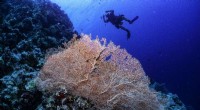
* Ocean acidification: As more CO2 dissolves in the ocean, the pH decreases (becomes more acidic), impacting marine life.
* Weathering of rocks: Carbonic acid contributes to the weathering of rocks, releasing minerals and influencing the formation of caves and other geological formations.
* Formation of bicarbonate ions: Carbonic acid can donate a proton (H+) to form bicarbonate ions (HCO3-) which play a vital role in buffering the pH of water bodies.
In summary: Carbonic acid doesn't exist in nature in a pure form but is formed in water through the reaction of dissolved CO2 and water. This reaction is crucial for various natural processes and has significant environmental implications.