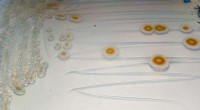
1. Reproduction via Spores:
* Spores: Tiny, single-celled reproductive units that can develop into a new plant without fertilization.
* Sporangia: Structures that produce and contain spores.
2. Alternation of Generations:
* Gametophyte (Haploid): The dominant generation in bryophytes, producing gametes (sex cells).
* Sporophyte (Diploid): The dominant generation in lycophytes, ferns, and horsetails, producing spores.
3. Vascular Tissue (in most):
* Xylem: Transports water and minerals.
* Phloem: Transports sugars and other nutrients.
* Bryophytes (mosses, liverworts, hornworts): Lack vascular tissue, hence their small size and dependence on moist environments.
4. Root-like Structures:
* Rhizoids: Found in bryophytes, help anchor the plant and absorb water.
* Roots: Found in lycophytes, ferns, and horsetails, provide structural support and absorb nutrients.
5. Leaf-like Structures:
* Phyllidia: In bryophytes, small, simple, leaf-like structures.
* Leaves: True leaves in lycophytes, ferns, and horsetails, with vascular tissue.
6. Stem-like Structures:
* Caulid: In bryophytes, a simple, stem-like structure.
* Stem: True stem in lycophytes, ferns, and horsetails, supporting leaves and transporting nutrients.
7. Environmental Adaptations:
* Moist environments: Bryophytes prefer moist conditions due to lack of vascular tissue.
* Shady habitats: Ferns thrive in shady, humid environments.
* Diverse habitats: Lycophytes and horsetails can survive in a variety of environments.
Key Differences Between Groups:
* Bryophytes: Non-vascular, small, require moist environments.
* Lycophytes (club mosses): Vascular, small, have small leaves and sporangia in cones.
* Ferns: Vascular, large, have large, compound leaves (fronds) and sporangia on the underside of leaves.
* Horsetails: Vascular, have jointed stems and whorled leaves.
Overall, spore-bearing plants are a diverse group with various adaptations, playing crucial roles in ecosystems worldwide.