Here's why:
* Primary succession happens in areas where there was no previous soil or life, like a newly formed volcanic island or a retreating glacier. It starts from scratch.
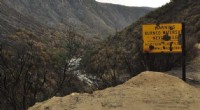
* Secondary succession occurs in areas where a previous ecosystem existed but was disturbed, such as a forest fire, a flood, or abandoned farmland. The soil remains, providing a foundation for new life.
Key characteristics of secondary succession:
* Faster than primary succession: Existing soil and seeds/spores in the soil accelerate the process.
* Pioneer species are often different from those in primary succession.
* Climax community: The final stable community is often similar to the original one, but the exact composition may vary due to the disturbance.
Examples of secondary succession:
* A forest fire that clears out vegetation but leaves soil intact.
* A flood that washes away plant life but leaves behind sediment and organic matter.
* An abandoned farm field that gradually becomes overgrown with weeds and shrubs.
Understanding the distinction between primary and secondary succession helps us predict how ecosystems will recover after disturbances and develop strategies for managing them.